01
Context
Moosburg was home to Stalag VII-A, one of the largest German prisoner-of-war camps of the Second World War, where tens of thousands of POWs were held. As the last eyewitnesses pass away, that memory is slowly disappearing from the city. The history still survives, across a museum, archives and guided tours, but those offerings are scattered and hard to find, so most residents and visitors walk straight past it without ever knowing it is there.
02
Problem
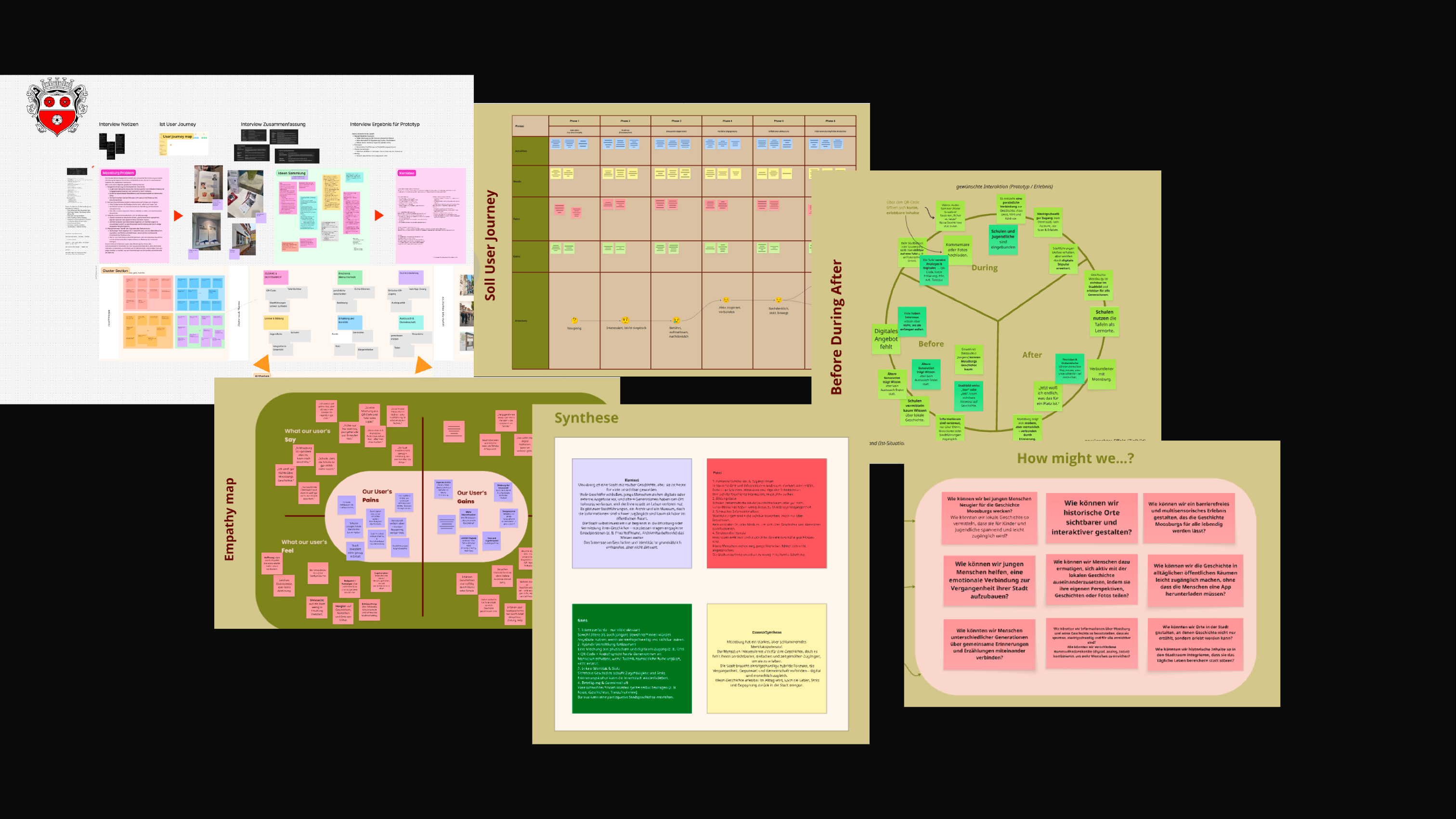
“How might we bring Moosburg’s history into the city space, barrier-free and without an app, for all generations, as a central access point to the existing historical offerings and a tool that works for guided city tours?” Four obstacles shaped the brief: information is fragmented across institutions; the community resists purely digital solutions; the history runs on a pull model where people have to actively go looking for it (Holschuld) instead of having it brought to them (Bringschuld); and in everyday public space it simply lacks visibility.
03
Solution
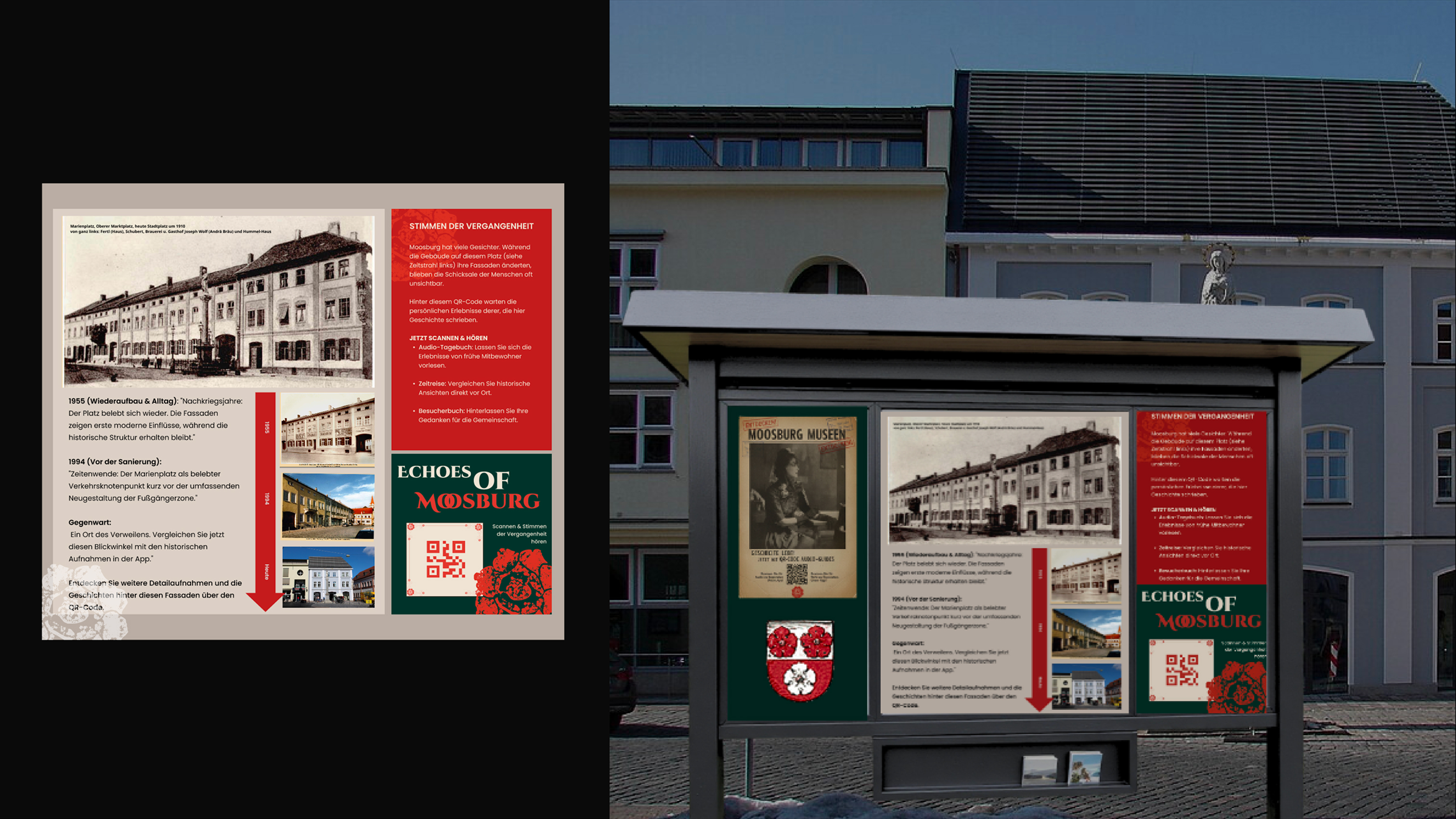
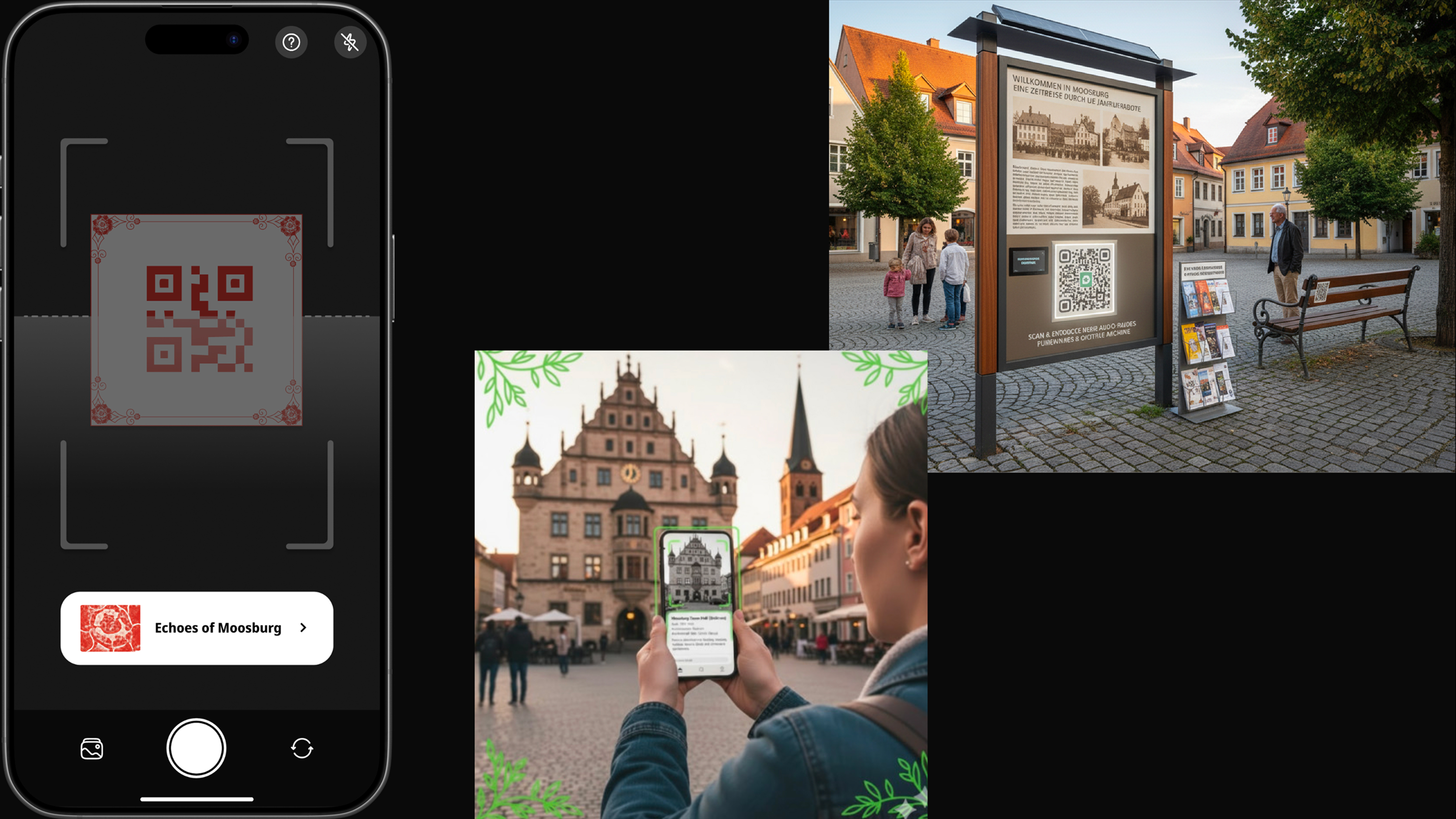
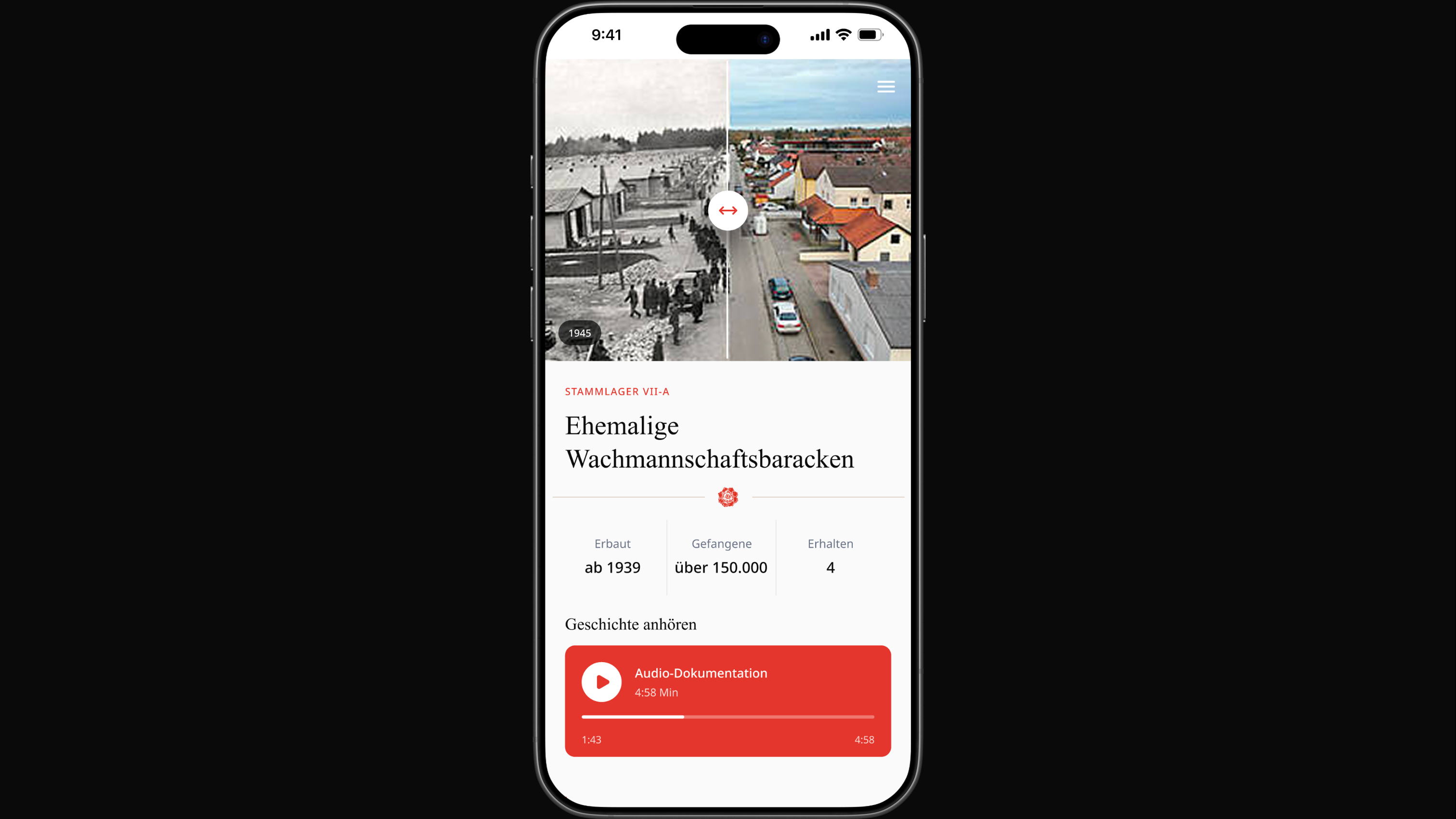
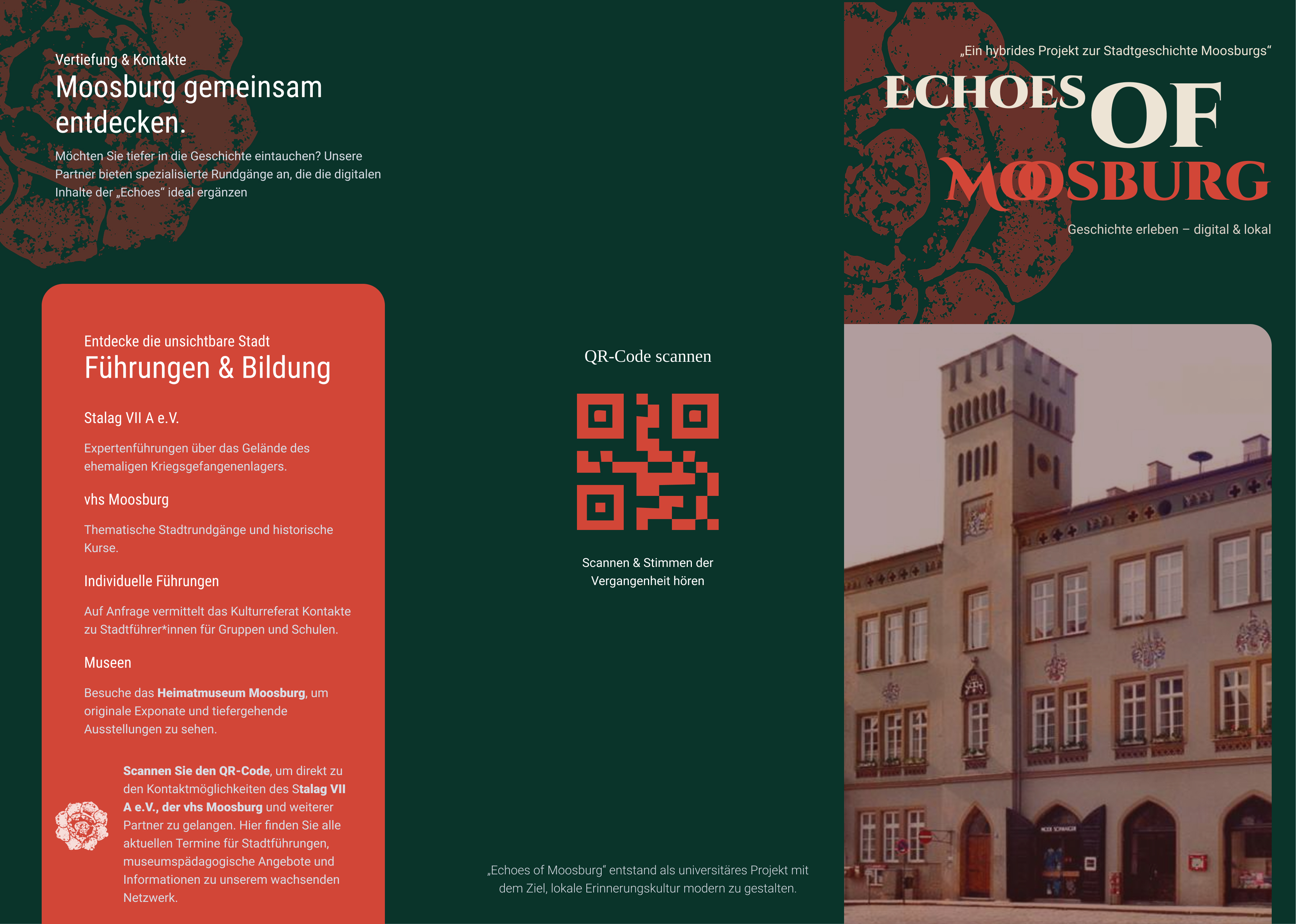
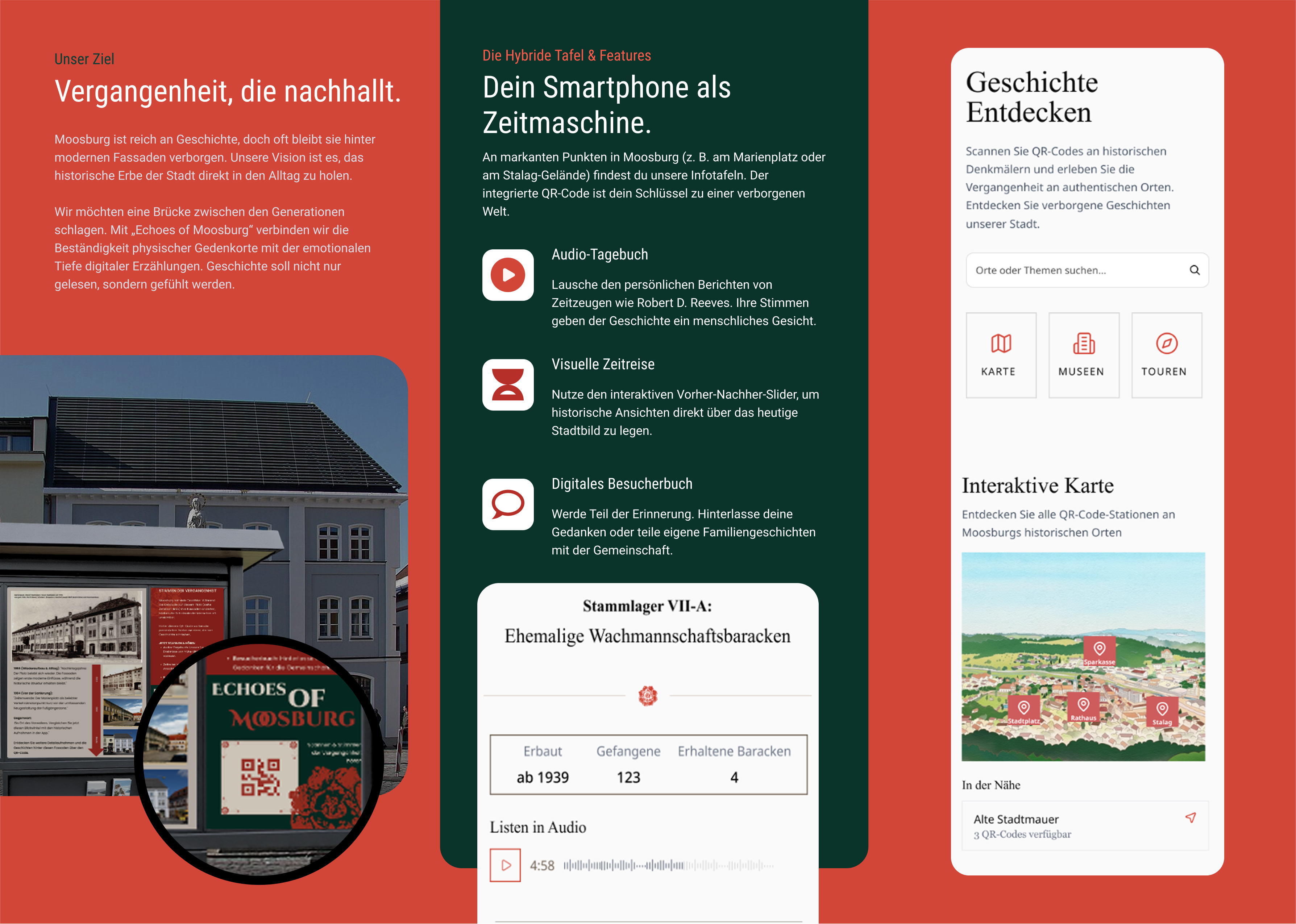
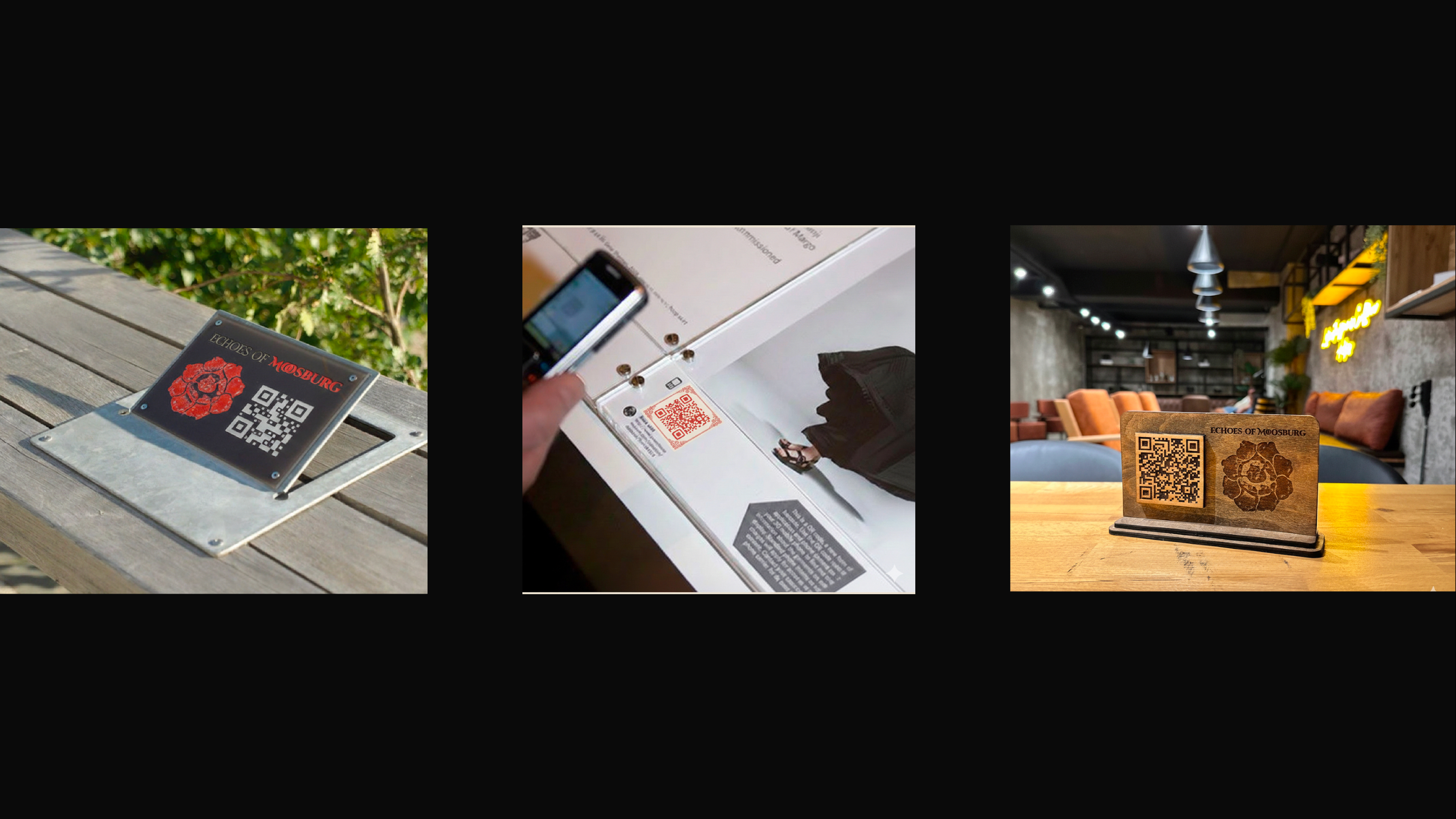
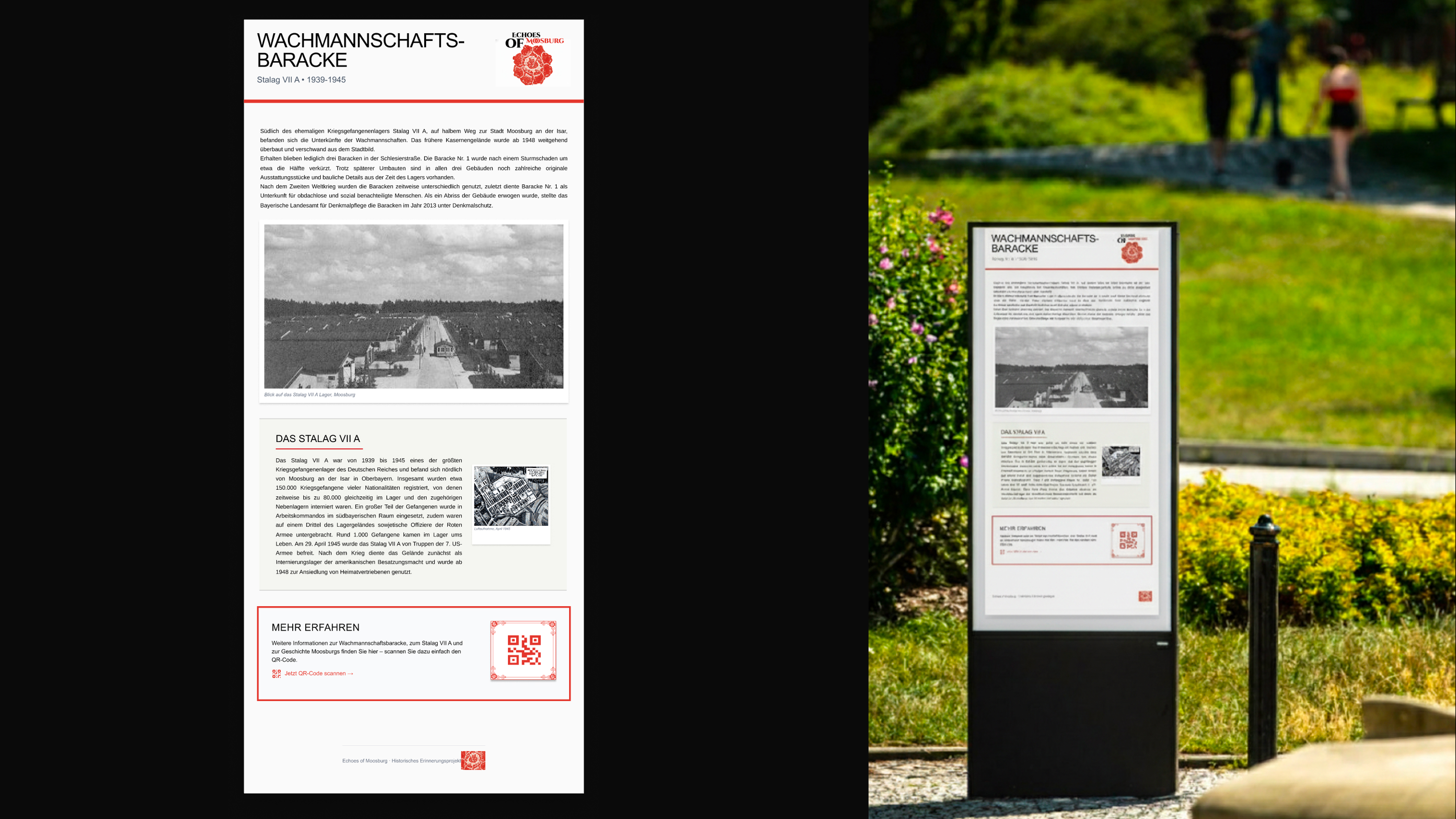
An analog-first anchor in the streetscape. A physical board (Tafel) placed at each historic site is the anchor; a QR code on it is the key that opens a bundled digital layer, audio diaries, visuals and archive material, without forcing anyone to install an app. A compartment holds the printed “Echoes” brochure for those who prefer paper, and the same anchor doubles as a working tool for city guides and the museum. Built on participation, it invites residents to add their own memories, keeping the project alive and independent of any single institution.